Small Group Tours from India: What Changes When You Travel with Fewer People?
When people choose an international tour, they usually compare the destination, hotel, itinerary and price.
There is one thing they often overlook:
How many people will actually be travelling with them?
That number can affect almost every part of a group holiday.
It can affect how quickly the group moves, how easy it is to communicate, how much time is spent waiting, how well travellers get to know each other and how personal the overall experience feels.
This is the idea behind small group tours from India.
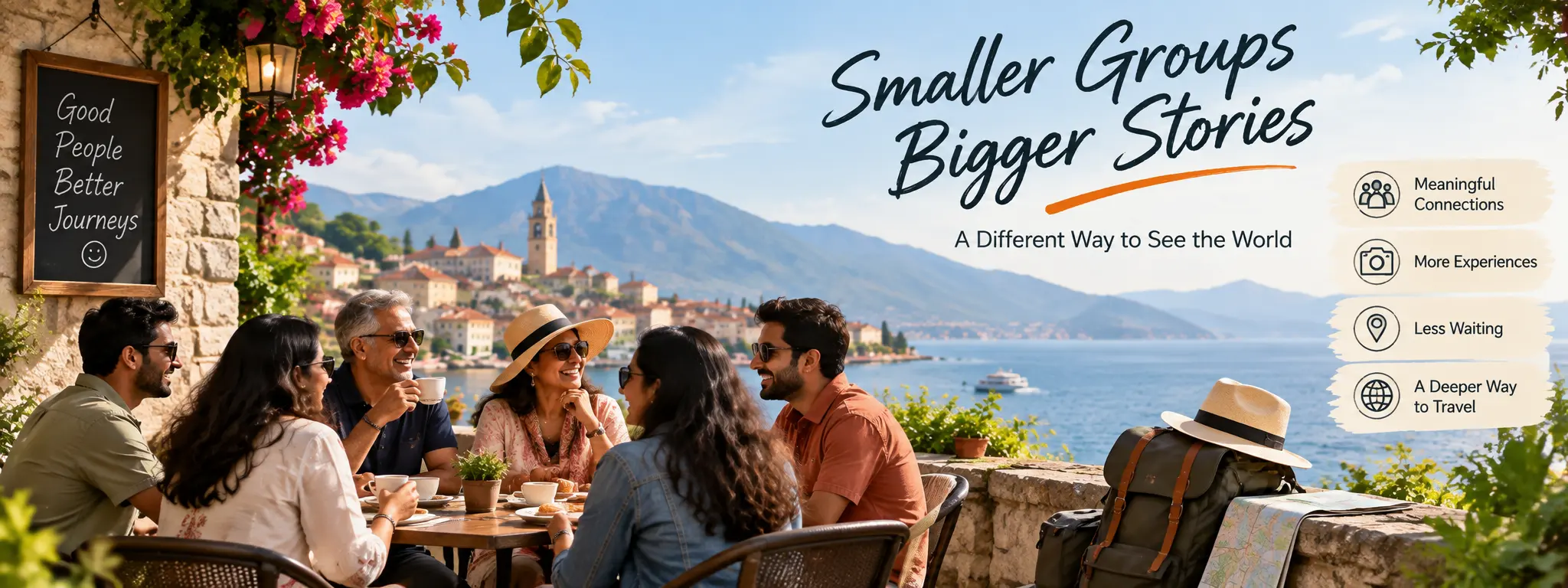
Instead of putting a large number of travellers into one departure, small-group travel keeps the group limited. PickYourVacay generally plans its groups around 8-25 travellers, creating a more manageable environment for international travel.
But is a smaller group really better?
Not necessarily for everyone.
The better question is:
What changes when you travel with fewer people, and does that style suit you?
Let's look at it without the usual travel-sales talk.
What Makes a Group Tour "Small"?
There is no single worldwide number that defines a small group.
One company may call 20 people in a small group. Another may consider 30 people small.
So when you see the words small group tour, don't stop there.
Find out the actual maximum group size.
For example, an 8–25 person group tour gives you a very different idea of the experience than a tour that advertises itself as "small" but regularly takes 40 or 50 travellers.
The number matters because a group is not just a number on a booking sheet.
It becomes the size of the social group you spend your holiday with.
The Real Difference Is Not "Small vs Big"
It is easy to think that small group travel simply means:
fewer people = better holiday.
That's too simple.
The real difference is how the size of the group affects the flow of the trip.
Consider a normal sightseeing day.
Everyone needs to:
-
Leave the hotel
-
Get into the vehicle
-
Reach the attraction
-
Meet at the agreed point
-
Explore
-
Return to the vehicle
-
Move to the next stop
-
Have meals
-
Return to the hotel
When there are fewer people, coordinating these steps can become easier.
That is where the small-group model becomes interesting.
1. Your Holiday Becomes More About the Destination
A common problem with large group travel is that the group itself can become something you constantly have to manage.
Someone is late.
Someone has gone to the wrong meeting point.
Someone needs extra time.
The coach is waiting.
The group needs to be counted again.
These things may sound minor.
But when they happen repeatedly across several days, they can affect how you experience the holiday.
A smaller group doesn't remove these situations completely.
It simply reduces the number of people involved.
That can help the trip feel less like managing a crowd and more like exploring a destination.
2. Conversations Become Easier
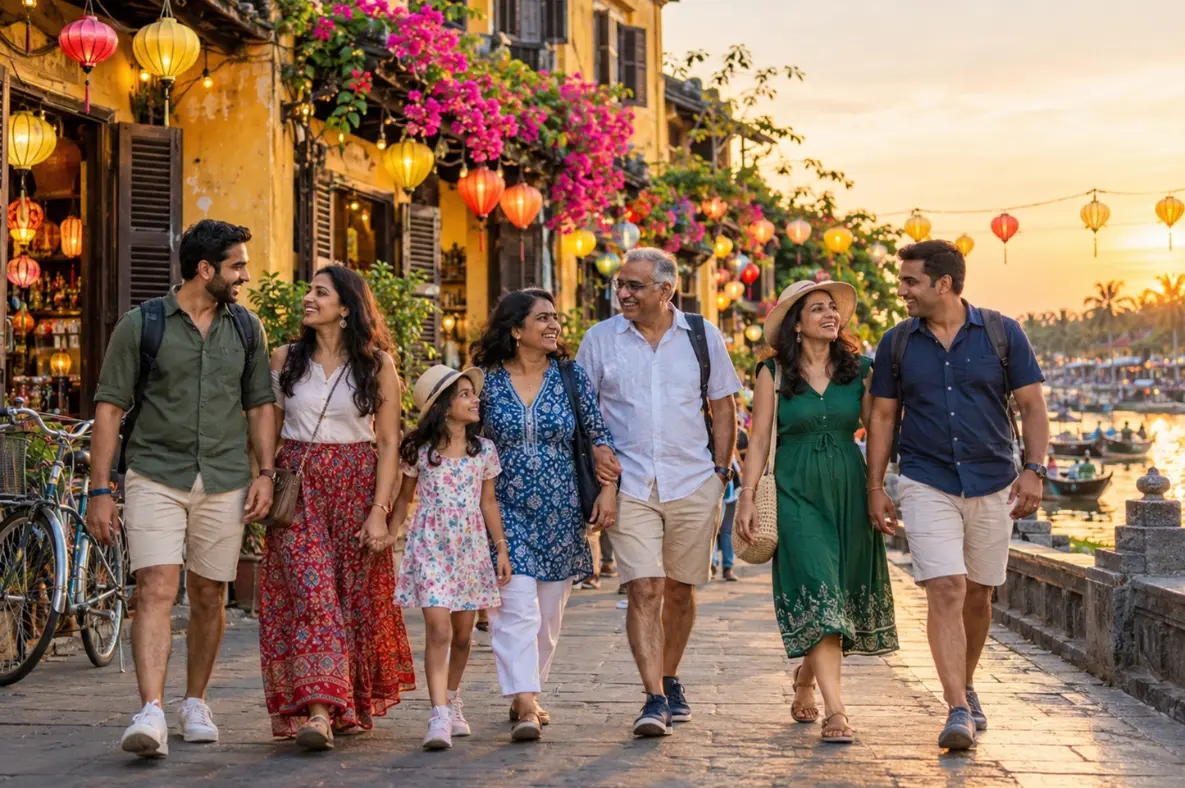
There is a big difference between being one person in a group of 50 and being one person in a group of 15.
In a smaller group, you naturally see the same people more often.
You learn their names.
You talk during transfers.
You may share meals.
You exchange photographs.
You might even continue travelling together after the tour.
This is one of the less obvious benefits of small group international tours.
The group can become part of the travel experience without becoming overwhelming.
For solo travellers in particular, this can provide a middle ground between travelling completely alone and joining a very large tour.
3. The Tour Team Has Fewer People to Coordinate
A tour manager or coordinator has a major role in any group holiday.
They may need to communicate:
-
Departure times
-
Meeting points
-
Sightseeing plans
-
Hotel information
-
Transfer details
-
Changes to the schedule
Communicating with 15 people is naturally different from communicating with 50.
A smaller group can make it easier for information to reach everyone.
It can also make it easier for travellers to approach the tour team when they have questions.
Of course, the quality of the operator still matters.
A small group with poor organisation is still a poorly organised tour.
4. Transfers Can Feel Less Complicated
Most travellers think about sightseeing when they think about a holiday.
But a large part of an international tour involves simply moving from one place to another.
Airport to hotel.
Hotel to attraction.
Attraction to restaurant.
One city to another.
Hotel back to airport.
Every transfer requires coordination.
With a smaller group, there are fewer people getting on and off the vehicle, fewer bags to organise and fewer people to gather before departure.
That doesn't automatically mean every transfer will be faster.
Traffic, airports and local conditions still matter.
But the human coordination involved can be simpler.
5. You Can Spend More Time Together
Small-group travel is not only about saving time.
It can also create a different social atmosphere.
In a large group, you may spend most of the trip talking to the few people sitting near you.
In a smaller group, there is a better chance of interacting with most of the travellers.
That can be particularly valuable when a tour is designed around a shared travel style.
This is one reason PickYourVacay combines small groups with category-based travel.
The categories include:
-
The Family Escape
-
Ishq and Safar
-
Forever Young
-
Sakhi
-
Gen Z
The idea is simple.
You are not just choosing a destination.
You are also choosing the kind of people you want to experience it with.
6. Smaller Does Not Mean Less Fun
This is another common misconception.
Some travellers hear "small group" and imagine a quiet tour with nothing happening.
It can actually be the opposite.
A group of 15 people can still be lively.
You can:
-
Explore together
-
Take group photographs
-
Share meals
-
Celebrate special moments
-
Meet new people
-
Enjoy activities together
The difference is that the group remains small enough for people to actually know one another.
So small-group travel is not about removing the social side of group tours.
It is about making the social group more manageable.
7. It Can Be Easier to Keep the Group Moving
Every group has different personalities.
Some people are early.
Some are always five minutes late.
Some want to take hundreds of photographs.
Some want to stop at every shop.
That is normal.
But when a group becomes very large, individual delays can affect many other people.
With fewer travellers, keeping everyone together can be easier.
This can be particularly helpful on itineraries that have several sightseeing stops in one day.
Again, this is not a promise that every small group will move quickly.
The itinerary and tour management still matter.
8. You May Get a Stronger Sense of the Trip
There is another difference that is harder to measure.
In a very large tour, you can sometimes feel like you are simply following the crowd.
In a smaller group, you may feel more connected to the people, places and experiences around you.
You know who you are travelling with.
You recognise the tour team.
You understand the rhythm of the group.
By the middle of the trip, the group may already feel familiar.
That can change the overall feeling of the holiday.
Small Group vs Large Group Tours: Which One Should You Choose?
Neither is automatically better.
It depends on your personality and what you expect from a holiday. If you prefer
Large Group Tours
More people, a larger social environment, and a traditional coach-tour atmosphere.
Small Group Tours
Fewer people, easier communication, a closer group experience, and a more manageable travel environment.
The important thing is to understand the difference before booking.
Who Can Benefit from Small Group Travel?
Small groups can work particularly well for travellers who want organised travel without the feeling of being part of a very large crowd.
Families
Parents can spend more time enjoying the trip rather than keeping track of a very large group.
Couples
Couples who want an organised international holiday may prefer a smaller social setting.
Senior travellers
A smaller group can make communication and coordination easier.
Solo travellers
You can have the structure of a group tour while meeting a manageable number of new people.
Friends travelling together
A small group can provide a social travel experience without becoming too crowded.
The key is not age or traveller type.
It is a travel preference.
What Makes a Good Small Group Tour Package?
A small group alone does not make a tour good.
A well-designed small group tour package should also have a sensible itinerary and clear arrangements.
Look at:
Group size
Ask for the maximum number, not just the average.
Itinerary
Check whether the schedule gives you enough time to enjoy each destination.
Hotels
Look at the location, not just the hotel rating.
Transportation
Understand how the group will travel between airports, hotels and attractions.
Sightseeing
Check exactly what is included.
Meals
Understand what meals are part of the package.
Support
Find out who will assist the group during the trip.
These details matter just as much as the group size.
How to Recognise a Genuine Small Group Tour Operator
The phrase "small group" is attractive, so it is worth checking what a company actually means by it.
A reliable small group tour operator should be able to tell you:
-
Maximum group size
-
Type of transportation
-
Number of travellers already booked
-
What the package includes
-
How the itinerary works
-
Who manages the group
-
What support is available during the trip
If you cannot get clear answers, don't make your decision based only on the words "small group."
What Are the Best Small Group Tours?
There isn't one answer.
The best small group tours are different for different travellers.
For one person, the best tour may be a relaxed European itinerary.
For another, it may be an action-filled Southeast Asian holiday.
For a family, the best option may be a comfortable itinerary with fewer hotel changes.
For a couple, the priority may be experiences and free time.
So instead of searching only for "best small group tours," think about:
Best for whom?
That question will lead you to a much better choice.
Why Group Size Matters More on International Trips
Group size matters on every group holiday, but international trips have more moving parts.
You may be dealing with:
-
Airports
-
Immigration
-
Different languages
-
Currency
-
Multiple hotels
-
Local transportation
-
Different sightseeing locations
-
City-to-city transfers
Having fewer people to coordinate can make the overall journey feel more manageable.
This is especially useful when the itinerary covers multiple cities or involves frequent transfers.
The PickYourVacay Approach
PickYourVacay was built around the idea that group travel does not need to mean travelling with a crowd.
Its international tours generally use groups of around 8–25 travellers, combined with category-based travel.
That means the group itself becomes part of the planning.
Instead of simply asking:
"Where should we go?"
the approach also considers:
"Who should we travel with?"
This creates a different kind of group-tour experience.
The focus is on smaller groups, like-minded travellers and organised international travel, while the exact experience still depends on the destination and package you choose.
Is a Small Group Tour Right for You?
Ask yourself these five questions:
Do I dislike travelling with very large groups?
Do I prefer getting to know the people I travel with?
Do I want someone else to handle the major travel arrangements?
Do I prefer a more manageable sightseeing group?
Would I rather travel with 10–20 people than 40–50?
If you answered yes to most of these, small group travel from India may be worth considering.
If you enjoy large social groups and don't mind the extra coordination, a traditional large group tour may suit you better.
There is no universally correct choice.
The best holiday is the one that fits your way of travelling.
Frequently Asked Questions
What are small group tours from India?
Small group tours from India are organised trips where a limited number of travellers travel together. The exact group size depends on the operator. PickYourVacay generally plans groups around 8–25 travellers.
What is an 8–25 person group tour?
It is a tour designed for a maximum group size of roughly 8–25 travellers. The smaller number can make group coordination and social interaction more manageable.
Are small group tours better than large group tours?
Not for everyone. Small groups can suit travellers who prefer easier coordination and a closer social experience, while large groups may suit travellers who enjoy bigger crowds and meeting more people.
Are small group international tours more expensive?
They can be, depending on the destination, hotels, transportation and services included. Compare the complete package rather than looking only at the group size.
How do I choose the best small group tour?
Start with your travel style. Then compare the destination, itinerary, group size, hotels, transportation, inclusions, reviews and operator support.
What should I ask a small group tour operator?
Ask for the maximum group size, itinerary, hotel details, transportation arrangements, package inclusions, cancellation terms and information about support during the trip.
Final Thought
A holiday is experienced one day at a time.
You wake up with the same group.
You travel with the same group.
You explore with the same group.
You share meals, photographs and experiences with the same group.
That is why group size matters.
A 50-person tour and a 15-person tour can visit exactly the same destination, but they don't necessarily feel like the same holiday.
For travellers who value closer connections, easier coordination and a less crowded group experience, small group tours from India can offer an interesting alternative to traditional large-group travel.
And sometimes, travelling with fewer people doesn't mean experiencing less.
It can mean experiencing the journey more.
PickYourVacay | Your Choice. We Create.